EcoGuide · Air Sealing · Updated 2026-10-12 · 1,200 words
Leaky Ductwork: How to Find and Seal the Hidden Leaks
The Short Answer
If you have forced-air heating or cooling, your ducts are probably leaking. ENERGY STAR estimates that in a typical house about 20 to 30 percent of the air that moves through the duct system is lost due to leaks, holes and poorly connected ducts. When the ducts run through an attic, crawlspace or garage, that air is heated or cooled and then dumped outside the living space.
You can seal the ducts you can reach with mastic or foil tape in an afternoon. For ducts hidden in walls and ceilings, or to know how much leakage there is, a contractor with a duct tester is the way to go.
Signs Your Ducts Are Leaking
ENERGY STAR lists these as signs your ducts may need attention:
- you have high summer and winter utility bills
- you have rooms that are difficult to heat and cool
- you have stuffy rooms that never seem to feel comfortable
- your ducts are located in an attic, crawlspace, or the garage
- you find tangled or kinked flexible ducts in your system
Source: ENERGY STAR duct sealing. Dust streaks at duct joints and registers are another clue: air has been moving through the gap.
Where Leaks Hide
- Joints and seams between duct sections, especially where old cloth duct tape has dried and peeled.
- Connections at the air handler and plenums, where the main trunk meets the furnace or air handler.
- Boots, where the duct meets the register in the floor or ceiling. The gap between the boot and the drywall or subfloor is a common leak.
- Flexible duct connections that have pulled loose, been crushed or were never sealed.
- Return ducts and panned joist cavities, where sheet metal is nailed under floor joists to make a return. These are often very leaky and pull in air from crawlspaces and basements.
How to Seal the Ducts You Can Reach
- Turn the system off and start where the ducts are accessible: basement, attic, crawlspace, garage.
- Clean the joint so the sealant sticks: dust and old tape off.
- Seal with mastic or foil tape. ENERGY STAR says to start by sealing air leaks using mastic sealant or metal tape. The Department of Energy says duct mastic is the preferred material for sealing seams and joints. For gaps wider than about a quarter inch, the DOE job aid says to apply temporary UL-listed or mesh tape as a backer to hold mastic.
- Connect and fasten loose sections with sheet metal screws before sealing, and reattach flex duct with a strap or clamp.
- Insulate ducts in unconditioned spaces. The DOE says insulating ducts in unconditioned spaces is usually very cost-effective, and ENERGY STAR requires a minimum of R-8 duct insulation for ducts in unconditioned spaces such as attics in its certified homes.
Don’t use cloth duct tape. ENERGY STAR’s advice is blunt: never use duct tape, as it is not long-lasting. When Lawrence Berkeley National Laboratory tested duct sealants in the 1990s, the researchers reported that, of all the sealants tried, only duct tape failed.
When to Call a Professional
Most duct leakage is in places you cannot reach without opening walls. A contractor can measure it with a duct tester, a calibrated fan that pressurizes the duct system. The Building America Solution Center explains that the fan is used to pressurize or depressurize the duct system to 25 pascals; the airflow needed to hold that pressure is the leakage. A test before and after tells you whether the sealing worked.
- Manual sealing of accessible ducts with mastic, the same as DIY but faster and with testing.
- Aerosol sealing seals from the inside. Lawrence Berkeley National Laboratory, where it was developed, says it uses airborne adhesive particles to seal leaks from inside of pressurized ducts, which reaches the leaks behind walls.
Cost: Angi puts duct sealing at $2,250 on average, with a typical range of $500 to $4,000; aerosol sealing averages about $1,300 in the same guide. Ask for leakage test numbers before and after, and check for utility rebates first.
Safety: if you have a gas furnace or water heater, sealing return-side leaks near them can change how they vent. The DOE says carbon monoxide detectors are highly recommended in homes with fuel-burning appliances; ask the contractor for a combustion safety check after major duct work.
What We’d Buy
For the accessible ducts: mastic for joints and irregular gaps, foil tape for straight seams.
We may earn a commission if you buy through these links, at no extra cost to you. Products are chosen on published specifications; we do not test them in-house (how we choose).
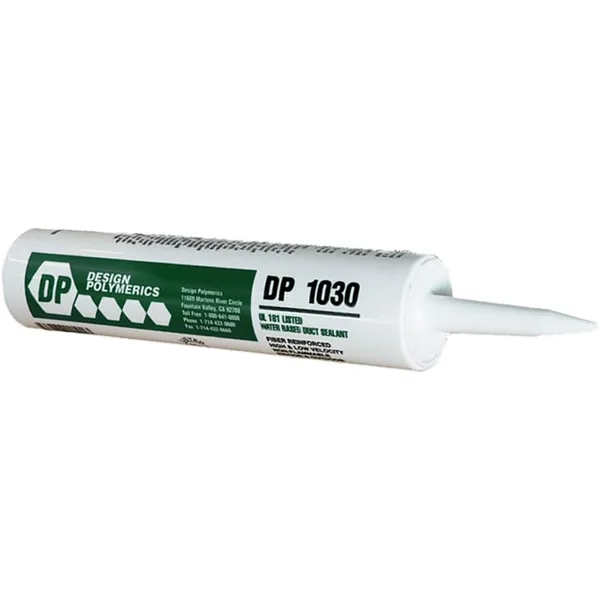
Speedi-Products Duct Mastic Sealant
Water-based mastic in a caulk-gun tube. Brush or press it over joints, seams and boot connections.
Check price on Amazon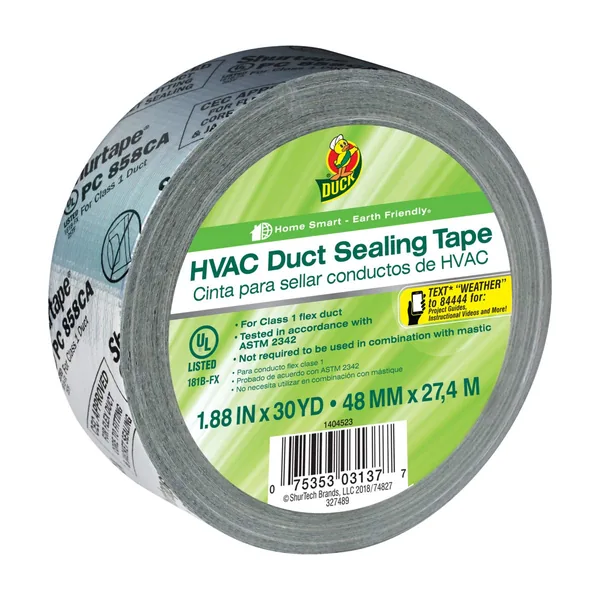
Duck Brand HVAC Duct Sealing Tape
Foil-type tape for straight sheet-metal seams. Not a substitute for mastic on irregular gaps.
Check price on AmazonFree: Home Energy Audit Checklist (PDF)
A two-page, room-by-room checklist for finding air leaks, standby power and heating and cooling waste yourself, in the order that pays back fastest. Get it now, plus new fix guides by email. Unsubscribe any time.
By signing up you agree to receive emails from EcoHome Intelligence. See our Privacy Policy.
Frequently Asked Questions
How much air do leaky ducts lose?
ENERGY STAR estimates that in a typical house about 20 to 30 percent of the air moving through the duct system is lost to leaks, holes and poorly connected ducts.
Can I use duct tape to seal ducts?
No. ENERGY STAR says never to use duct tape because it is not long-lasting, and Lawrence Berkeley National Laboratory found cloth duct tape was the only sealant type that failed its tests. Use mastic or foil (metal) tape.
What is the best way to seal ductwork?
Mastic is the Department of Energy's preferred material for seams and joints. Use foil tape on straight seams, a mesh backer under mastic for wider gaps, and screws to fasten loose sections first.
How much does professional duct sealing cost?
Angi reports an average of $2,250, with most jobs between $500 and $4,000 (July 2026). Aerosol sealing averages about $1,300.
Should ducts in the attic be insulated?
Yes. The DOE says insulating ducts in unconditioned spaces is usually very cost-effective, and ENERGY STAR certified homes need at least R-8 duct insulation in attics.
Related Guides
- How to find thermal leaks — the rest of the house
- How much does an energy audit cost? — duct testing as part of an audit
- Upstairs hotter than downstairs — ducts are often why
- Attic air sealing cost — when the ducts run through the attic
Sources
- ENERGY STAR: Duct sealing
- U.S. Department of Energy: Minimizing energy losses in ducts
- U.S. Department of Energy: Weatherization job aid, seal ducts with mastic (PDF)
- Building America Solution Center: Duct leakage tests
- Building America Solution Center: Total duct leakage tests
- U.S. Department of Energy: High-R duct insulation
- Lawrence Berkeley National Laboratory: Duct tape study (1998)
- Lawrence Berkeley National Laboratory: Aerosol duct sealing
- Angi: Duct sealing cost (July 2026)
