EcoGuide · Thermal Leaks · Updated 2026-11-01 · 1,300 words
Best Thermal Curtains for Winter, and How to Hang Them So They Work
Our picks at a glance
Prices on Amazon change often. As an Amazon Associate we earn from qualifying purchases, at no extra cost to you.
The Short Answer
Thermal curtains help, but less than the packaging suggests, and only when they are closed and hung tight. The U.S. Department of Energy says that when drawn in cold weather, most conventional draperies can reduce heat loss from a warm room by up to 10%, while tightly installed cellular shades can cut heat loss through windows by 40% or more, about 10% of heating energy (DOE).
| Pick | Best for | What you get (listing) | Amazon price* |
|---|---|---|---|
| NICETOWN Thermal Blackout Curtains Check price › | Cheapest way to cover a cold window | Two 42″ × 63″ triple-weave panels; other sizes on the listing | $11.66 |
| DriftAway Thermal Curtain Liner Check price › | Adding a second layer behind curtains you already have | Two 50″ × 80″ thermal blackout liners with rings | $33.99 |
| BlindsAvenue Cordless Cellular Shade Check price › | The biggest measured saving | Cordless honeycomb shade made to the width you order | $40.77 (24″ × 48″) |
Product links go to Amazon; we may earn a commission at no extra cost to you.
Our pick for most windows: a pair of NICETOWN thermal curtains in a length that reaches the sill or the floor, closed every night. If you already own curtains, add the DriftAway liner instead: DOE says two draperies hung together create a tighter air space than one. For the windows that bother you most, a cellular shade does the most.
*Prices as listed on Amazon for delivery to Los Angeles on November 1, 2026. We compared DOE guidance and the listings; we do not test products in-house (how we choose).
How to Hang Thermal Curtains So They Work
Most of the benefit comes from trapping still air between the curtain and the glass. DOE’s advice (DOE):
- Hang them close to the window, and let them fall onto the sill or the floor.
- Close the top with a cornice, or mount the rod near the ceiling, so warm air does not spill over the top and down the glass.
- Seal the sides and overlap the center. DOE suggests Velcro or magnetic tape to hold the edges to the wall at the sides and bottom.
- Double up. Two draperies hung together create a tighter air space than one, and the room-side layer stays close to room temperature.
- Use them. Close all draperies at night in winter, and keep closed those that get no sun during the day. Open south-facing ones on sunny days to let the heat in.
That last step is where most homes fall short: a Department of Energy study found that between 75% and 84% of coverings remain in the same position throughout the day.
1. NICETOWN Thermal Blackout Curtains: Best Budget Curtains
The most-reviewed thermal curtains on Amazon (more than 134,000 ratings). The listing describes triple-weave blackout fabric that blocks 85% to 99% of light, two 42-inch-wide panels with grommets, and machine-washable polyester. The 63-inch length suits a window that ends above a radiator or desk; choose a longer size on the listing so the curtain reaches the sill or the floor.
Worth knowing: “thermal” is a marketing term here; NICETOWN does not publish an R-value. What makes the difference is hanging them as DOE describes.
We may earn a commission if you buy through these links, at no extra cost to you. Products are chosen on published specifications; we do not test them in-house (how we choose).
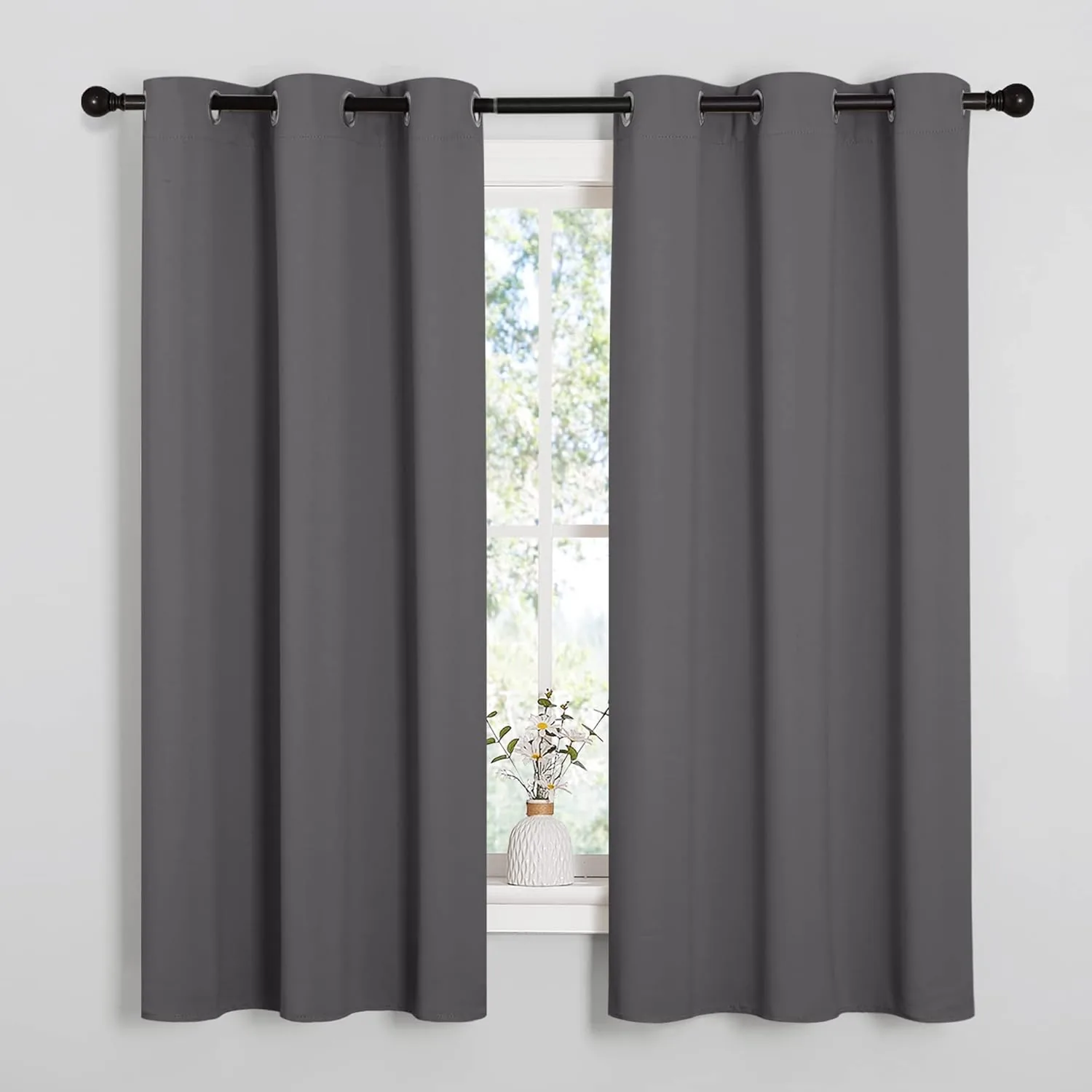
NICETOWN Thermal Blackout Curtains
Triple-weave blackout fabric; two 42″ × 63″ panels with grommets (other sizes listed); machine washable.
Check price on Amazon2. DriftAway Thermal Curtain Liner: Best for Curtains You Already Own
Two 50″ × 80″ blackout liners with 16 metal rings, sized for 84-inch grommet curtains, according to the listing. They hang behind your existing curtains on the same rod, which gives you the two-layer setup DOE recommends without replacing anything.
We may earn a commission if you buy through these links, at no extra cost to you. Products are chosen on published specifications; we do not test them in-house (how we choose).
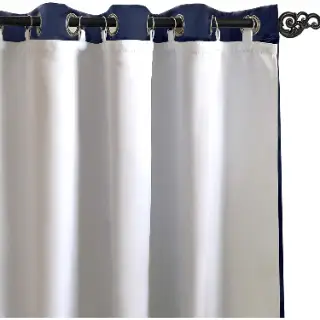
DriftAway Thermal Curtain Liner
Two 50″ × 80″ thermal blackout liners; rings included; fits 84″ grommet curtains; machine washable.
Check price on Amazon3. BlindsAvenue Cordless Cellular Shade: Biggest Measured Saving
If a window is cold enough to bother you every night, a cellular shade does more than any curtain. DOE calls insulated cellular shades the window coverings with the highest R-values, and its fact sheet found they saved up to 20% on heating energy compared with bare windows. Each BlindsAvenue shade is made to the width you order and is cordless, which the Consumer Product Safety Commission recommends wherever young children live.
Measure first. For an inside mount, BlindsAvenue says to order the shade 1/4 to 1/2 inch narrower than the window opening. Look for the Attachments Energy Rating Council label when you compare shades: its Cool Climate rating reflects heating-season savings.
We may earn a commission if you buy through these links, at no extra cost to you. Products are chosen on published specifications; we do not test them in-house (how we choose).
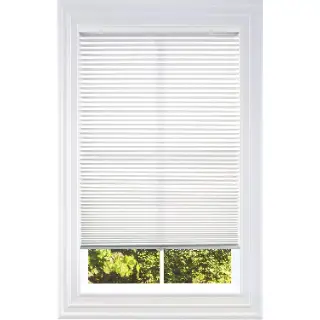
BlindsAvenue Cordless Cellular Shade
Cordless honeycomb shade made to the width you order; inside or outside mount; listing shown is 24″ × 48″.
Check price on AmazonCurtains, Shades or Window Film?
- Drafty window (you can feel moving air): seal it first with shrink film or rope caulk. Our window insulation kits guide covers both. A curtain over a leaking window just slows the draft.
- Cold glass but no draft: thermal curtains, closed at night, or a cellular shade.
- Single-pane or very old windows: low-e storm windows or interior panels save the most; see window treatments that save energy.
Windows are worth the attention: DOE says heat gain and loss through them account for 25% to 30% of residential heating and cooling energy use.
Free: Home Energy Audit Checklist (PDF)
A two-page, room-by-room checklist for finding air leaks, standby power and heating and cooling waste yourself, in the order that pays back fastest. Get it now, plus new fix guides by email. Unsubscribe any time.
By signing up you agree to receive emails from EcoHome Intelligence. See our Privacy Policy.
Frequently Asked Questions
Do thermal curtains really work?
Yes, modestly. DOE says most conventional draperies, drawn in cold weather, can reduce heat loss from a warm room by up to 10%. They work best hung close to the window, reaching the sill or floor, sealed at the sides and closed at night.
Are thermal curtains better than cellular shades?
No. DOE says tightly installed cellular shades can reduce heat loss through windows by 40% or more, about 10% of heating energy, and calls them the window coverings with the highest R-values. Curtains are cheaper and easier to fit.
Do blackout curtains keep heat in?
Heavy, tightly woven blackout curtains help when they are closed and hung close to the glass, but DOE notes that performance varies with fabric and color, so it is hard to generalize. How you hang and use them matters more than the label.
Should I close my curtains during the day in winter?
Close the ones that get no sun. Open south-facing curtains on sunny days to let the heat in, and close everything at night.
How can I make my existing curtains warmer?
Add a thermal liner behind them on the same rod. DOE says two draperies hung together create a tighter air space than one. Also lower or extend the rod so the curtains reach the sill or floor, and seal the sides with Velcro or magnetic tape.
Related Guides
- Electric blanket vs space heater — the cheaper way to stay warm at night
- Window insulation kits and draft stoppers — seal the drafts first
- Window treatments that save energy — shades, storm panels and film
- Most energy-efficient space heater — for the coldest room
Sources
- U.S. DOE Energy Saver: Energy-efficient window coverings (archived March 2026)
- U.S. DOE: Cellular shades fact sheet (2021, PDF)
- U.S. DOE: Residential windows and window coverings study (PDF)
- U.S. DOE Energy Saver: Energy-efficient windows (archived June 2026)
- Attachments Energy Rating Council: reading the label
- CPSC: Go cordless
