EcoGuide · Phantom Loads · Updated 2026-10-03 · 1,600 words
Why Your Electric Bill Doubled in Two Years (Even Though Nothing Changed)
The Short Answer
A bill is two numbers multiplied: how many kilowatt-hours you used, and what you paid for each one. Rates have gone up, but not enough to double a bill. The U.S. average residential price was 16.00 cents per kWh in 2023 and 17.3 cents in 2025, a rise of about 8%. Even from 2021 (13.66 cents) to 2025 the rise is about 27%.
So if your bill has doubled, rates explain part of it at most. The rest is higher usage, a change to your rate plan, or a billing problem. The steps below separate them, in the order that costs nothing first.
What Rates Have Done
| Year | U.S. average residential price |
|---|---|
| 2021 | 13.66 cents per kWh |
| 2022 | 15.04 |
| 2023 | 16.00 |
| 2024 | 16.48 |
| 2025 | 17.3 |
| 2026 (EIA projection) | 18.2 |
Figures are from the Energy Information Administration’s Electric Power Annual for 2021 to 2024 and its Short-Term Energy Outlook of September 2026 for 2025 and 2026. EIA’s own summary: retail electricity prices have increased faster than the rate of inflation since 2022.
These are national averages. Your utility may have risen more, and the average hides big regional differences. For scale, the average U.S. home used 863 kWh a month in 2024 and paid $142.26.
Step 1: Split Rate From Usage
Take the same month from this year and from two years ago. From each bill, note the total kWh and the total charge, and divide the charge by the kWh to get your real cost per kWh.
| What you find | What it means | Go to |
|---|---|---|
| kWh about the same, cost per kWh up sharply | Your rate or plan changed | Step 2 |
| kWh up, cost per kWh about the same | Something is using more electricity | Steps 3 and 4 |
| Both up | Both problems; start with usage, it is usually the bigger lever | Steps 2 to 4 |
| The bill says “estimated” | The meter was not read; the next actual reading can produce a catch-up bill | Step 2 |
Compare the same calendar month so weather does not mislead you. If your utility offers it, download your usage history: the Department of Energy’s Green Button program lets customers securely download their own detailed energy usage from participating utilities’ websites.
Step 2: If It Is the Rate
- Check which plan you are on. A fixed-price supply contract that expired and rolled onto a variable rate can change the cost per kWh overnight.
- Look for time-of-use pricing. The Department of Energy describes programs that charge high prices during times of peak demand and low prices off-peak. If you were moved onto one, when you run things now matters.
- Read the line items. Supply (generation), delivery and fixed charges are listed separately; see which one grew.
- Query estimated readings and ask for an actual read.
- Ask about a meter test. Rules vary by state. In Maryland, for example, the utility must test the meter at no charge on request, though not more than once during an 18-month period. Your state utility commission’s website has the rule for your state.
Step 3: If It Is Usage, Start With the Biggest Loads
EIA’s breakdown of electricity use in U.S. homes puts air conditioning at 19%, space heating at 12% and water heating at 12%, with lighting and refrigerators next. A change big enough to double a bill is almost always in that list.
- Heating. If you have a heat pump, check the thermostat is not on emergency heat and that auxiliary heat is not running in mild weather. Backup heat costs far more than the heat pump. See emergency heat vs auxiliary heat. Portable electric heaters and electric baseboards are the same kind of resistance heat.
- Cooling. Start with the filter: the Department of Energy says replacing a dirty, clogged filter can lower your air conditioner’s energy consumption by 5% to 15%. If the system runs constantly and no longer gets the house comfortable, that is DOE’s cue to call a technician.
- Ducts. ENERGY STAR says that in a typical house about 20 to 30 percent of the air that moves through the duct system is lost to leaks and poor connections. A duct that has come apart in the attic or crawl space shows up as a room that will not heat or cool and a higher bill.
- Water heating. It is about 18% of your home’s energy use. A dripping hot tap, a leaking tank relief valve or a thermostat set too high all add to it. The Department of Energy suggests 120°F, and draining a quart from the tank every three months to clear sediment.
- Refrigerators and freezers. The Department of Energy says dirty coils can increase the energy cost of the refrigerator by as much as 35%, and advises against keeping an old one as a second refrigerator. ENERGY STAR puts the extra cost of a refrigerator over 15 years old at about $95 per year.
Then ask what is new or running longer than it used to: a dehumidifier, a pool or hot tub, an electric vehicle, a space heater, a second freezer, someone now at home all day. People often say nothing changed and then find one of these.
Step 4: Measure Instead of Guessing
Two tools turn suspicion into numbers. A plug-in meter shows what one appliance uses over a day or a week. A whole-home monitor shows the house’s total draw in real time, so you can switch breakers off one at a time and see which circuit the load is on.
We may earn a commission if you buy through these links, at no extra cost to you. Products are chosen on published specifications; we do not test them in-house (how we choose).
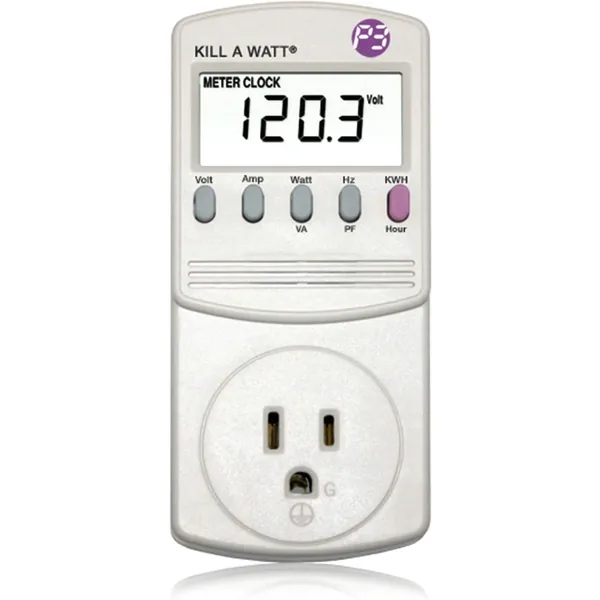
P3 Kill A Watt P4400 Electricity Usage Monitor
Plug an appliance into it to read its watts and kWh over time. Works for anything on a standard plug.
Check price on Amazon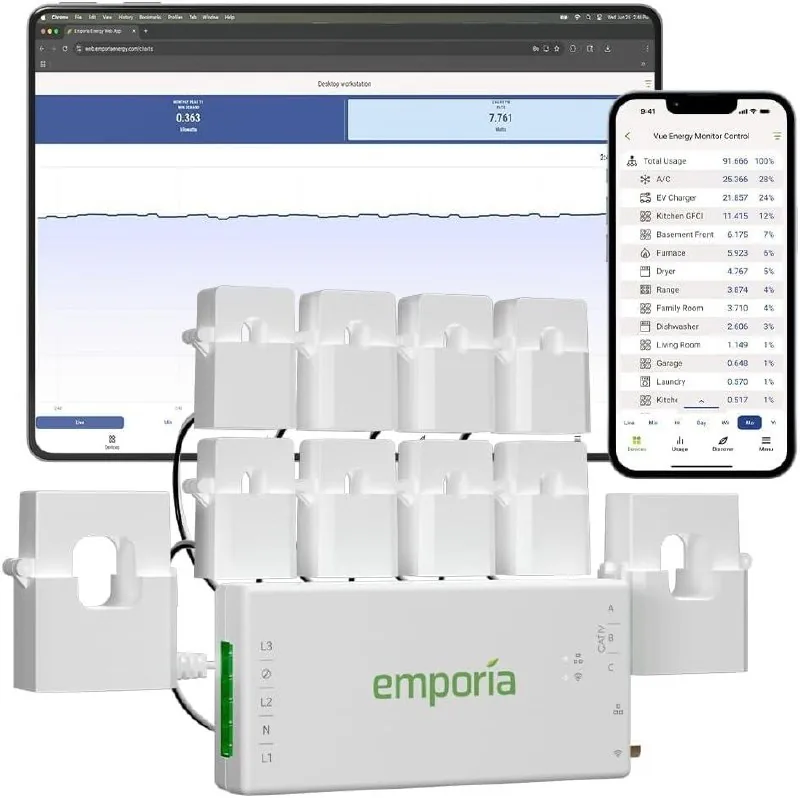
Emporia Vue 3 Home Energy Monitor
Clamps onto the mains in the electrical panel and shows whole-home use in an app. Panel installation is a job for an electrician if you are not confident.
Check price on AmazonDo not overlook the small constant loads. Lawrence Berkeley National Laboratory puts standby power at typically 5–10% of residential electricity use. It will not double a bill, but it is the easiest part to cut: see find phantom loads in four minutes and the free Dead Plug Detector.
If You Cannot Find It
- Get an energy assessment. The Department of Energy says a home energy assessment can help you understand the whole picture of your home’s energy use. Many utilities offer them free or at a discount. See what an energy audit costs.
- Call the utility with your two bills and your cost-per-kWh sums. Ask them to explain the difference line by line.
- If the bill is unaffordable now, the federal Low Income Home Energy Assistance Program helps with energy bills; the referral line is 1-866-674-6327. Most utilities also offer payment plans if you ask before the bill is overdue.
Free: Home Energy Audit Checklist (PDF)
A two-page, room-by-room checklist for finding air leaks, standby power and heating and cooling waste yourself, in the order that pays back fastest. Get it now, plus new fix guides by email. Unsubscribe any time.
By signing up you agree to receive emails from EcoHome Intelligence. See our Privacy Policy.
Frequently Asked Questions
Why did my electric bill double when nothing changed?
Rates have risen, but the U.S. average went up only about 8% from 2023 to 2025, so a doubled bill usually means higher usage, a change of rate plan, or estimated meter readings catching up. Divide the charge by the kWh on an old and a new bill to see which.
How much have electricity rates gone up?
EIA figures show the U.S. average residential price rising from 13.66 cents per kWh in 2021 to 17.3 cents in 2025, with 18.2 cents projected for 2026.
What uses the most electricity in a home?
EIA puts air conditioning at 19% of household electricity, space heating at 12% and water heating at 12%, followed by lighting and refrigerators.
Can a bad electric meter cause a high bill?
It is uncommon, but you can ask for a test. Rules vary by state; in Maryland the utility must test the meter free on request, no more than once in 18 months.
How do I find what is using so much electricity?
Compare kWh between bills first. Then check heating, cooling, water heating and refrigeration, and measure suspects with a plug-in meter or a whole-home monitor.
Related Guides
- Why is my electric bill so high in winter? — the seasonal causes
- Find phantom loads in four minutes — the small constant loads
- Best home energy monitors — whole-home monitoring options
- A $500 electric bill as a renter — what you can do without owning the place
- Best smart plugs with energy monitoring — measure a suspect appliance
Sources
- EIA: Electric Power Annual, average price by sector
- EIA: Short-Term Energy Outlook (Sept 2026)
- EIA: U.S. electricity prices continue steady increase (May 2025)
- EIA: 2024 average monthly bill, residential (PDF)
- EIA: Electricity use in homes
- U.S. Department of Energy: Air conditioner maintenance
- ENERGY STAR: Duct sealing
- U.S. Department of Energy: Water heating
- U.S. Department of Energy: Energy Saver guide (PDF)
- U.S. Department of Energy: Refrigerators and freezers
- ENERGY STAR: Refrigerators
- Lawrence Berkeley National Laboratory: Standby power FAQ
- U.S. Department of Energy: Green Button
- U.S. Department of Energy: Reducing electricity use and costs
- U.S. Department of Energy: Home energy assessments
- Maryland Public Service Commission: Request meter tests
- LIHEAP: Low Income Home Energy Assistance Program
